An Ordinary Man’s Guide To Radicalism
The police responded that….the Terrorists had disguised themselves as Normal Human Beings – as students, as working men.
Normal Human Beings.
Of all the claims that the police made, this was the scariest. In one stroke, it brought every youth in Jamia Nagar under the scanner of suspicion. How was a truly normal person expected to behave?
-Neyaz Farooquee
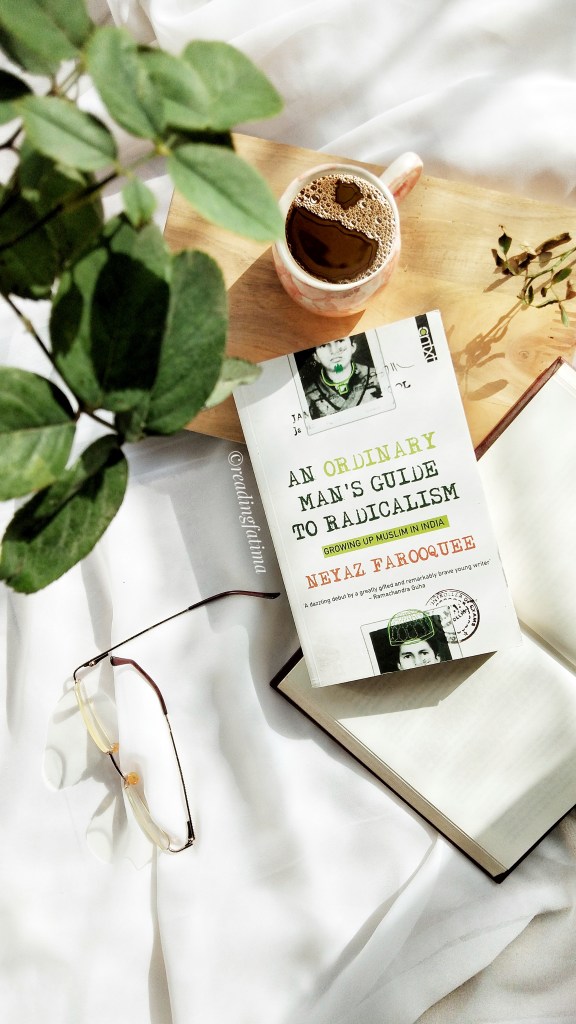
‘An Ordinary Man’s Guide To Radicalism’ is a memoir of the author and the reflection of many ordinary Muslim youth of India who arrive in big cities from their poor homes to achieve good education and jobs but are inadvertently radicalized or forced to have such thoughts as they reside in ghettos or study in universities stereotyped as Sensitive Area (as in hub for terrorism), and living in constant paranoia of false accusations, arrest, landing in jails or being killed in encounter.
The book is more of a personal essay where the author recounts how his life and ideologies changed following the Batla House Encounter a few minutes from his house in Jamia Nagar simultaneously talking about his life as a child in Bihar (his hometown), teachings of his grandfather, arrival in Delhi, his admission in Jamia School, friends and roommates, wayward adolescence, Jamia Nagar locality, localites, studying Bsc Bioscience in Jamia University and ultimately choosing journalism as career.
This book’s unique as the author, albeit a journalist, has narrated unrefined views, outlook, behavior of the local public and students towards the police, media and government. Overnight the students of a university and people of a locality are denoted as potential threat by the media and as per the author young men arrested from the streets. The professors of a revered university are left to investigate, defend and protect Young Minds and the reputation of a University all by themselves
Through this book Neyaz Farooquee has made a valiant effort to showcase the world about the untold fear or I must say horror haunting the Muslim community and it’s youth for the fault of identity.
The tone and language of the book is nowhere extreme or professing radicalism instead the life of the author is a blueprint of the life of thousands of Muslim boys who come from poor/middle class family and live in Delhi alone for studies.
I felt most parts about Islamic teachings, poetries, details about friends, family and city irrelevant and unnecessary. I wished they were avoided.
Recommended for people who love to read non-fiction related to such subjects.
The infusion of Hindustani language and numerous shocks and shayaris might be a disappointment for some but if you like such writing you would be charmed.
 Bombay Reader